Naturally Gluten-Free Superfoods From Asian Kitchens Worth Trying
Asian cooking has a reputation for being easy on people who avoid gluten, and in part the reputation is earned. Rice, fresh vegetables, tofu, fish, eggs and coconut sit at the center of many traditions, and none of them contain wheat, barley or rye. The trouble is that sauces, noodles and wrappers can bring gluten back, so a little knowledge goes a long way.
Are superfoods real?
Superfood is a marketing word and not a scientific one. No single food makes someone healthy, and the term often gets attached to anything unusual or expensive. Many Asian dishes are built from a handful of simple ingredients, which makes it easier to see what’s in them. A better question is whether a food is nutritious, whether you enjoy it, and whether it fits your needs, including any need to avoid gluten.
Even so, East and Southeast Asian kitchens offer many foods worth trying, from fermented soy products to herbs, mushrooms, and seafood, and many are naturally gluten-free. Even a traditional delicacy such as edible bird's nest is an animal product made by swiftlets and not a grain, so it contains no wheat, barley or rye of its own, though any soup, drink or sauce it is served in has to be checked separately.
What is gluten?
The Food and Drug Administration’s consumer update on gluten-free labeling explains that gluten is a mixture of proteins that occur naturally in wheat, rye, barley and crossbreeds of these grains. The update notes that as many as 3 million people in the United States have celiac disease, that there is no cure, and that the only way to manage the condition is to avoid gluten.
Foods labeled gluten-free, or with similar terms such as without gluten, free of gluten, and no gluten, must meet criteria set by the agency, including a limit of less than 20 parts per million of gluten. The agency adds that inherently gluten-free foods, such as bottled spring water, fruits, vegetables and eggs, can also carry the label as long as any gluten that touched them stays under that limit.
For restaurants, the agency suggests asking what the restaurant means by gluten-free before ordering, and it encourages people to report labeling problems. The label is the starting point, and a conversation with the kitchen fills in the rest. The update also says there are currently no valid tests to detect gluten in hydrolyzed and fermented foods, such as cheese and yogurt, so makers who claim gluten-free for them must keep records to show they meet the standard. Remember that detail when shopping for fermented sauces.
Foods that start gluten-free
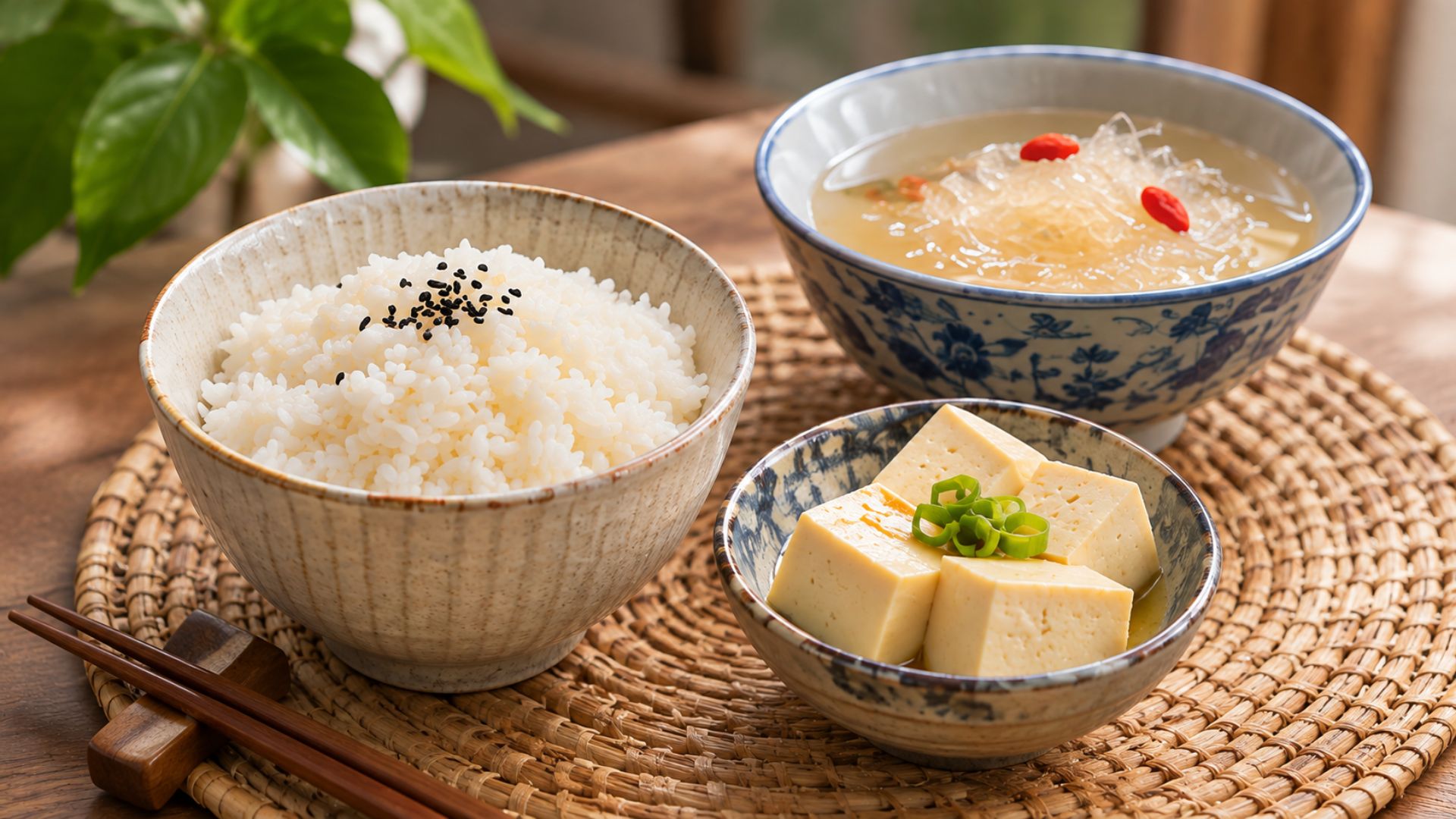
Plain steamed rice, congee made with water or stock, rice paper rolls, many rice noodles, plain tofu, edamame, fresh vegetables, eggs, fish and seafood, fruit and coconut milk all begin without any gluten. Mung beans, lotus root, water chestnuts, bok choy and daikon add variety, and a simple dish of steamed fish with ginger and scallion is naturally free of gluten if the sauce is chosen with care. Fresh herbs, chilies, garlic, ginger, scallions, lemongrass, and lime are free of gluten, as are most fruits, nuts, and seeds, so plain dishes can carry plenty of flavor without a bottled sauce. Mushrooms, nori and other seaweeds, and many fermented vegetables also start without gluten, though some kimchi recipes use wheat-based ingredients and the label needs a look.
Rice-based comfort dishes are an especially good fit. Chicken rice, coconut rice and plain rice bowls are built on foods without wheat, although the seasoning and sauce still need a look. Golden Nest, for example, sells ready-to-eat rice bowls in addition to bird’s nest products, and the label on each one is the place to confirm the gluten status of that particular recipe.
Where gluten hides
Soy sauce is the biggest surprise for many people, because traditional soy sauce is brewed with wheat. Tamari is often made with little or no wheat, but only a label that says gluten-free tells you for certain. Oyster sauce, hoisin sauce, some fish sauces, and many stir-fry sauces and marinades can also contain wheat or wheat-based thickeners.
Wheat noodles, dumpling wrappers, scallion pancakes, tempura batter and breaded coatings are obvious sources. Less obvious are seasoning packets, instant noodle flavorings, and imitation seafood, which often includes wheat starch. Shared woks, fryers, and cutting boards add the risk of cross-contact, which matters a great deal to people with celiac disease. Even a bowl of plain rice can be affected if it was cooked in a pot used for noodles or flavored with a sauce packet, so ask how it was prepared.
Rice noodles are another place to look closely. Many are made from rice flour and water, but some mixed noodles blend in wheat or tapioca and wheat, and the packaging is the only reliable guide.
Shopping and ordering with confidence
At the store, read the ingredient list and look for the gluten-free claim, remembering that the claim is voluntary. For imported products, check that the label meets the standard for the country where it is sold, since rules differ. A product without a claim is not necessarily unsafe, but it needs a closer look.
At a restaurant, ask which sauces contain soy sauce or oyster sauce, whether a separate wok can be used, and whether noodles or wrappers contain wheat. Dishes built around steamed fish, plain rice, stir-fried vegetables in a simple garlic sauce, and clear soups are good starting points. Plan for travel, gifts, and school lunches by packing a small bottle of gluten-free tamari and keeping a few labeled staples at home, so a quick meal never depends on guessing. Bring a card that explains your needs if language is a barrier, and speak to your doctor or a dietitian if you have celiac disease and want specific advice.